
Bitcoin and Gold: Competing Sources of Wealth?
Bitcoin is frequently dubbed the gold of today — but does this analogy hold true? Is it really possible to equate these two types of value?
Can Bitcoin Be Compared to Gold?
For centuries, gold has stood as the premier symbol of value. It’s a rare, physical, and resilient asset known globally, representing wealth and stability.
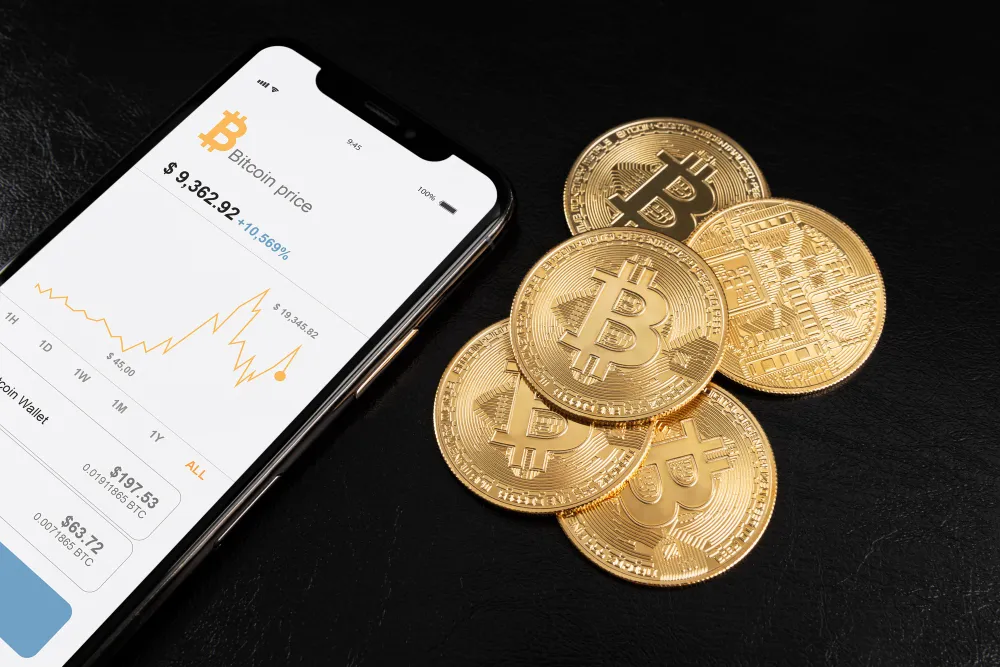
In a world that’s increasingly digital, decentralized, and uncertain, a vital question has surfaced in U.S. financial conversations.
Could Bitcoin be the new “digital gold”?
Grasping the Concept of a Store of Value
A store of value in finance is an asset that keeps its purchasing power intact over time.
Put simply, it preserves its value even when economic conditions are shaky, such as during inflation or loss of faith in traditional currencies like the dollar.
No matter the global situation, a store of value stays strong and dependable—far more than most national currencies.
Gold has effectively served this purpose throughout history, retaining its value even during crises like wars, economic downturns, or currency collapses.
Its global value is widely recognized, and the limited supply due to natural extraction limits helps maintain a fairly stable availability.
Bitcoin: The Concept of ‘Digital Gold’
Bitcoin emerged as an alternative to traditional finance, promoting a decentralized model supported by blockchain technology.
Its inventor, known as Satoshi Nakamoto, created a limited digital currency with a maximum supply of 21 million units.
This inherent scarcity, along with its decentralized nature and resistance to censorship, has led many to compare Bitcoin to gold.
Both Bitcoin and gold are challenging to produce, do not generate passive income, and are often seen as a way to preserve value during crises by investors.
Recently, various institutional investors in the U.S. have begun viewing Bitcoin as a hedge against inflation.
Comparisons Between Gold and Bitcoin
Both gold and Bitcoin share a limited supply. Gold’s scarcity arises from natural extraction difficulties, while Bitcoin’s availability is controlled by algorithms.
Both are fundamentally decentralized: gold isn’t dependent on governments or financial systems, and Bitcoin shares this independence.
They are regarded as alternative assets beyond traditional financial systems, often sought after in times of uncertainty.
Gold has always been a stable asset, while Bitcoin is quickly gaining traction on various exchanges, investment funds, and financial platforms across the U.S.
Main Differences
For thousands of years, gold has served as a dependable store of value, while Bitcoin, with a mere decade of existence, exhibits considerably greater volatility.
Over short periods, Bitcoin’s value can swing by 20% within just days.
Gold is a physical asset that can be safely stored, while Bitcoin is purely digital, requiring tech savvy and robust cybersecurity.
Gold is strictly regulated and acknowledged by central banks worldwide. On the other hand, Bitcoin faces various regulatory challenges and uncertainties, although the landscape is changing in the U.S. with recent ETF approvals and heightened SEC scrutiny.
Gold is utilized for numerous industrial applications and jewelry, and it serves as a monetary reserve for countries. In contrast, Bitcoin is predominantly viewed as a speculative asset or a digital store of value.
U.S. Investor Insights
In the United States, opinions are sharply polarized. Conservative investors continue to see gold as a safe haven during turbulent times.
Established funds keep gold in their portfolios for both security and diversification. In contrast, younger, tech-savvy investors and innovative fund managers are leaning towards Bitcoin as the store of value for the digital era.
The emergence of spot Bitcoin ETFs, recently sanctioned by the SEC, has made this digital asset more accessible and trustworthy for regular investors in the regulated U.S. finance arena.
Essential Factors for Investors
- Risk Profile: Bitcoin can be highly volatile, whereas gold tends to be more stable but may not see as much growth.
- Investment Horizon: Gold is often better for short to mid-term safety, while Bitcoin might offer superior long-term returns but with increased risk.
- Diversification: It’s wise to blend both assets rather than choosing one, ensuring a balanced investment portfolio.

Conteúdo Recomendado
Home Office, High Risk: Cyber Insurance Essentials
Have you ever considered the risks faced while working remotely from home? Discover how insurance can safeguard you.nn
Continuar Lendo * You will remain on the current site Home Office, High Risk: Cyber Insurance Essentials
Continuar Lendo You will remain on the current website