
Health insurance: reasons your choices could shrink this autumn
Health insurance choices can shift over time. Discover the reasons behind potential premium hikes, why some insurers might leave certain markets, and tips on getting ready for Open Enrollment.
Warning: Your health insurance options may shrink this fall
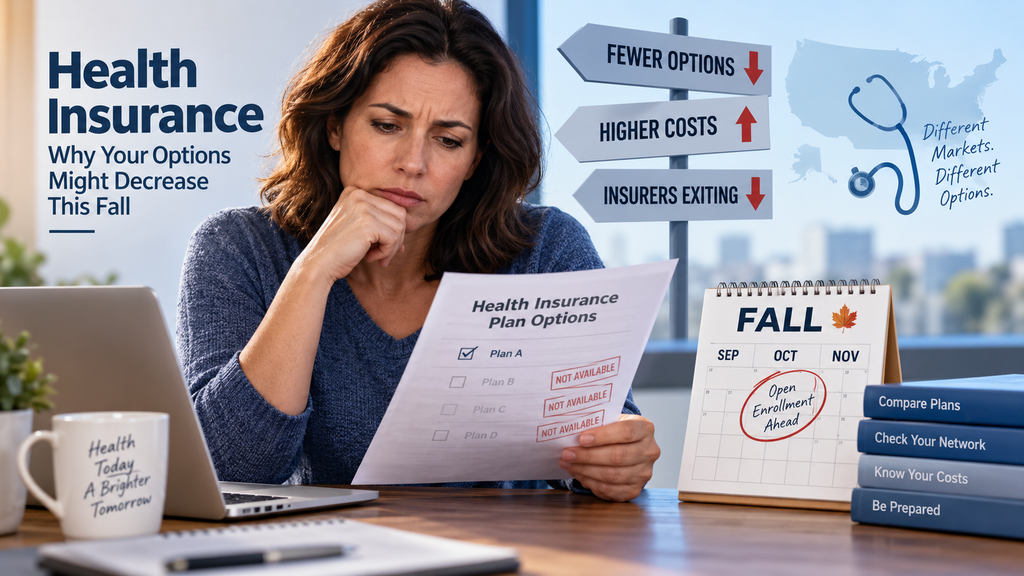
Some Americans might face fewer health insurance choices as the new season approaches.
Insurers are suggesting premium hikes, and a number of companies are pulling out of certain ACA Marketplace areas.
Meanwhile, seven insurers have announced plans to leave some Marketplace regions, while five others intend to enter new ones.
This doesn’t necessarily mean fewer options for everyone; it means your local health insurance landscape might change significantly this fall.
Reasons Behind the Decline in Health Insurance Choices
Health insurance options may reduce because some insurers are exiting ACA Marketplace regions, while others are adjusting their service areas.
This shift is caused by a mix of rising healthcare expenses, shifts in enrollment trends, and the end of boosted ACA premium subsidies.
KFF reported that the average number of insurers in each state dropped from 9.6 in 2025 to 9.0 in 2026.
This is important because the quantity of insurers in your area directly impacts how many plans you can review and choose from.
Are Insurance Providers Pulling Out of the ACA Marketplace?
Yes, several insurers have revealed plans to withdraw from certain ACA Marketplace regions in 2027.
For instance, Cigna is a key example, announcing it will leave the individual market in all 11 states where it currently offers coverage.
That said, the overall market is not contracting uniformly everywhere.
In fact, some insurers are expanding into new states, which could increase choices for consumers in certain locations.
Keep in mind: national patterns don’t always reflect what’s happening in your specific area.
Will Health Insurance Costs Rise?
It’s possible. Insurers are suggesting a median 15% hike in premiums for ACA Marketplace plans.
KFF reviewed rate submissions from 276 insurers across every state and D.C., revealing a median proposed increase of 15%.
However, this doesn’t guarantee your premium will rise by exactly 15%.
Your final cost is influenced by several factors, such as:
- Age;
- ZIP code;
- Household income;
- Household size;
- Plan type;
- Metal tier;
- Eligibility for premium tax credits;
- Available insurers.
Keep in mind that a national rate change won’t necessarily reflect your personal premium increase.
What’s Driving the Rise in ACA Health Insurance Premiums?
There are multiple reasons behind premium increases, including rising healthcare expenses and shifts in the ACA Marketplace’s risk pool.
A key factor is the end of the enhanced premium tax credits that were available through 2025.
This represents a significant adjustment to the monthly expenses for many families.
What Happened to ACA Premium Tax Credits?
The enhanced ACA premium tax credits expired at the close of 2025, causing many Marketplace shoppers to face higher coverage costs.
These enhanced subsidies were introduced in 2021 to provide greater financial help to those using the Marketplace.
Once these benefits ended, many individuals faced higher out-of-pocket premiums.
This change affects especially those who do not have access to health coverage through their employers.
Are More Consumers Opting for Bronze-Level Health Plans?
Indeed. According to KFF, the portion of Marketplace buyers choosing Bronze plans rose from 30% in 2025 to 40% in 2026.
Meanwhile, enrollment in Silver plans decreased from 57% down to 43%.
Why is this important?
This is because Bronze plans typically offer lower monthly premiums but come with higher deductibles and out-of-pocket expenses.
That makes them appealing for people who don’t often need medical care.
However, those with frequent medical needs might face much higher costs when they actually use healthcare services.
What Should You Do If Your Doctor Isn’t Included in the New Plan’s Network?
Before changing your health insurance plan, make sure to verify your provider network. This is one of the simplest details people often miss during Open Enrollment.
Confirm if your new plan includes coverage for:
- Primary care physician
- Specialists
- Preferred hospital
- Urgent care centers
- Mental health providers
- Pharmacies
- Prescription drugs
This is crucial if you’re currently undergoing medical treatment.
A cheaper premium won’t save you money if your favorite doctor is no longer in the network.
How to Prepare in September
September is an ideal month to get ready, even though Open Enrollment hasn’t begun yet.
Gathering the necessary details ahead of time will make the enrollment process much smoother.
1. Take Stock of Your Current Health Coverage
Review your existing plan details:
- Monthly premium
- Deductible
- Out-of-pocket maximum
- Doctors
- Hospitals
- Prescriptions
- Annual healthcare spending
Don’t depend on your memory alone.
Refer to your actual healthcare costs from the previous year.
2. Calculate Your Estimated Household Income for 2027
The income you expect to earn in 2027 can influence your qualification for financial help through the Marketplace.
HealthCare.gov considers factors like your household size and projected income to determine which plans and discounts you qualify for.
A significant change in your income can affect the cost of your health insurance coverage.
3. List Your Essential Healthcare Providers
Note down the doctors and hospitals you want to keep in your coverage network.
Afterward, check their networks once the 2027 plan options are released.
Taking this easy step can help you avoid costly errors.
4. Review and Compare Plans Once 2027 Options Are Released
Don’t just renew without checking first.
Look at your current plan alongside other choices in your area.
It’s smarter to compare more than just the premium cost.
What Do Personal Finance Experts Say About Health Insurance?
Leading U.S. personal finance outlets each tackle health insurance from unique perspectives.
NerdWallet places strong emphasis on comparing Marketplace plans, insurers, premiums, customer reviews, quality ratings, and options by state.
Bankrate highlights affordability and explores various ways consumers can access private health insurance coverage.
Investopedia covers wider shifts impacting healthcare consumers, including changes to Medicare and insurance policies.
CNBC Select often examines healthcare by highlighting the personal finance impact of medical bills and unforeseen health issues.
What Key Elements Are Often Left Out of Health Insurance Guides?
Much health insurance advice tends to emphasize which provider is best.
However, people facing coverage shifts in 2027 need to focus on a different question:
This article fills that practical gap.
The best plan isn’t always the highest rated nationally. It’s the one that fits your medical needs, budget, and local provider options.
Why September Is the Month to Focus On
The biggest error is waiting until the last moment before enrollment closes to explore your options.
By September, you should have a clear sense of your current healthcare spending and what’s most important in your coverage.
That way, once 2027 plans and rates are released, you’ll be ready to evaluate them without delay.
This year, this step is especially crucial since insurers are suggesting notable premium hikes and some carriers are adjusting their Marketplace involvement.
Getting prepared can increase your available choices, even if the overall market shrinks.
Author’s Opinion
Don’t wait until Open Enrollment to start considering your health insurance options.
The data from this year highlights why it’s important to start paying attention now: for 2027, insurers are suggesting a median premium hike of 15%, and some are exiting certain Marketplace regions.
However, the story isn’t that “health insurance is vanishing.”
That’s too generalized. A better takeaway is this: your local health insurance offerings might shift, so it’s essential to be prepared to evaluate your options.
If you’re self-employed, switching jobs, nearing retirement, or shopping for your own plan, don’t focus solely on the monthly premium.
A plan that saves you $50 a month might actually cost more overall if it has a much higher deductible or doesn’t include your preferred doctor.
When fall arrives, avoid automatically renewing your health insurance. Review your choices carefully, verify your provider network, and analyze the costs.

Recommended Content
Fed’s September meeting
Learn what savers should know about APYs, HYSAs, CDs and the Fed’s rate decision.
Continue reading * You will remain on the current site