
September Fed meeting: what shifts await savers?
The Federal Reserve's September gathering might influence savings rates. Discover what every saver needs to understand about APYs, high-yield savings accounts, CDs, and the impact of the Fed's rate choices.
How the Fed’s September Meeting Impacts Savers
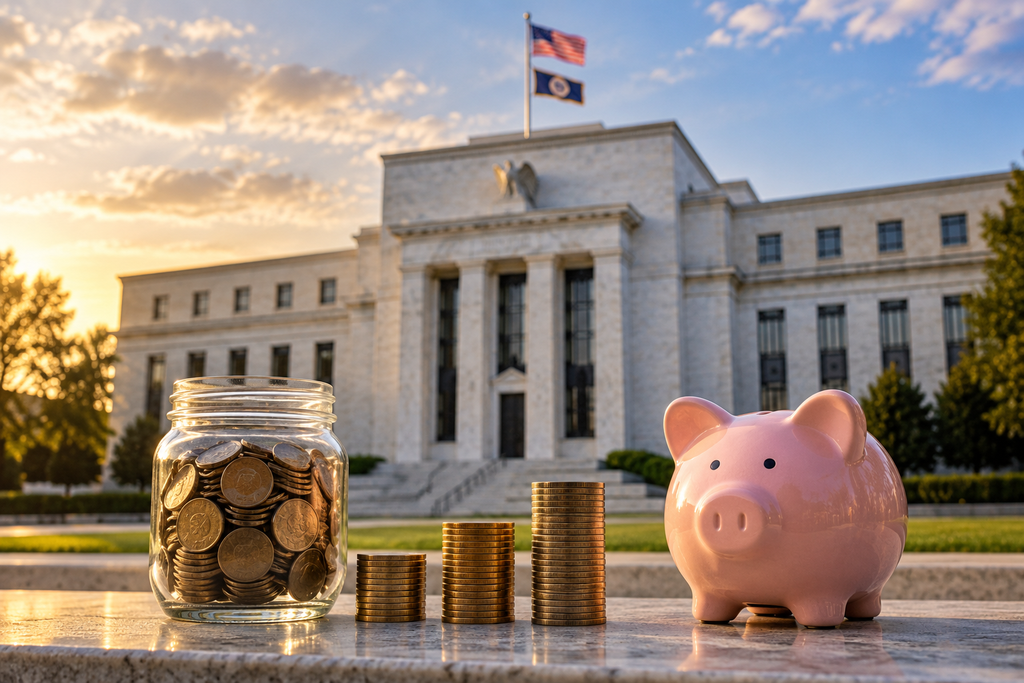
The outcome of the Fed’s September meeting could influence the interest you receive on your savings.
The Federal Open Market Committee (FOMC) will convene on September 15–16, 2026, with the rate announcement and press briefing scheduled for September 16.
The current federal funds target range stands at 3.50% to 3.75%. At its July meeting, the Fed kept rates steady, though three FOMC members favored a 25-basis-point hike.
For savers, the key concern isn’t just whether the Fed increases, decreases, or maintains rates.
The key point is how your savings APY changes and whether your funds continue to earn a strong return.
How will the Fed’s September meeting impact savers?
The Fed’s decision in September is important because it can affect the APYs on savings accounts, money market funds, and CDs.
That said, the Fed doesn’t directly control the APY on your savings. Instead, banks and credit unions set the rates they offer to depositors.
Here’s how it works: the Fed’s decision influences short-term interest rates, which affect banks’ funding costs, leading to changes in deposit rates and ultimately your APY.
The impact may not happen right away and can vary between different banks.
Will savings account interest rates shift after the Fed meeting?
They could, though not always matching the exact size of the Fed’s rate change.
Some banks react promptly by adjusting rates, while others take longer or only partially apply the change.
That’s why the APY you actually receive is more important than the Fed’s headline rate.
What is the current interest rate set by the Fed?
As of September 2026, the federal funds target range stands at 3.50% to 3.75%.
At its July 29 meeting, the FOMC kept this range unchanged. The committee noted that economic growth remained steady, though inflation was still above the 2% target set for the long term.
Three members disagreed, advocating for a 25-basis-point rate hike instead.
This is significant because it highlights ongoing debate within the Fed about the future path of interest rates.
When will the Fed hold its September meeting?
The Fed’s September meeting is set to take place from September 15 to 16, 2026.
The FOMC statement and the Federal Reserve’s press briefing will both occur on September 16.
For savers, the press conference is nearly as crucial as the rate announcement since it offers insight into the Fed’s outlook for upcoming meetings.
How will savings be affected if the Fed lowers rates?
When the Fed cuts rates, it usually leads to lower APYs on savings accounts.
However, this doesn’t guarantee your savings rate will drop by the exact same amount.
For instance, if the Fed lowers rates by 0.25 percentage points, your bank might:
- Reduce your APY by 0.25 percentage points
- Reduce it by a smaller margin
- Reduce it by a larger margin
- Keep it the same for a while
How your rate changes depends on your bank, the market, and how fiercely banks compete for deposits.
Is it wise to lock in a CD before a possible rate reduction?
Choosing a CD can be a good option if you want a guaranteed fixed rate and won’t need access to your funds during the term.
This strategy is especially useful when you expect interest rates to drop in the near future.
However, there’s a balance to consider. Savings accounts offer greater flexibility.
CDs provide more rate stability. Avoid tying up your emergency funds just because you think the Fed will cut rates soon.
How will savings be affected if the Fed hikes rates?
When the Fed raises rates, it often puts upward momentum on savings yields.
Banks vying for deposits tend to increase APYs, especially on high-yield savings and money market accounts.
Still, there’s no certainty your bank will fully pass on the rate hike to your account.
That’s why it’s important for savers to check the APY they’re actually earning against other competitive offers.
How to prepare ahead of the Fed’s September meeting
You don’t have to guess the Fed’s next move. Focus instead on understanding what your savings are earning right now.
Before September 16, spend a few minutes checking the details of your savings account.
1. Verify your current APY
Don’t assume your rate is the same as when you first opened the account.
Look up the APY currently shown in your account.
Remember, savings rates fluctuate and can vary over time.
2. Compare your rate with top high-yield savings accounts
If your bank’s rate is near the national average, check how it stacks up against current high-yield savings options.
A gap of a few percentage points could mean hundreds more in interest on larger savings balances.
3. Determine how much liquidity you require
Consider this: Will you need access to this money within the next several months?
If so, a savings account with easy access might be the better choice.
If not, you might want to explore CDs or other short-term products that better suit your needs.
4. Verify if your account has insurance coverage
Make sure your bank deposits have FDIC insurance. If you use a credit union, verify it’s covered by NCUA insurance.
Never compromise the security of your deposits just to get a marginally better APY.
Which economic indicators will shape the Fed’s September move?
The Fed’s September verdict follows the release of several key economic reports.
The Bureau of Labor Statistics has scheduled the following:
- August PPI: September 10
- August CPI: September 11
- August Employment Situation: September 4
The CPI release is especially important as it comes just a few days before the FOMC convenes.
The Federal Reserve aims for an inflation rate of 2% in the long term.
This means inflation figures will continue to play a key role when officials decide if monetary policy remains sufficiently tight.
Why is CPI important for savers?
Because inflation affects the real value of what your savings can purchase.
A 4% APY looks appealing.
However, if inflation matches or exceeds that rate, the increase in your account balance might not translate into greater purchasing power.
For savers, the aim isn’t just to chase the highest APY.
It’s about maintaining and increasing your purchasing power while ensuring your funds stay secure and accessible.
Fed’s September meeting: Key points savers should monitor
Here are three crucial aspects to keep an eye on when the Fed announces its decision.
H3: 1. The interest rate decision
Will the FOMC choose to:
- Raise rates?
- Hold rates?
- Cut rates?
This is the main takeaway, but it doesn’t tell the full story.
2. The Fed’s updated economic forecasts
The September session includes fresh projections on the economy’s outlook.
These forecasts offer insight into how officials expect inflation, jobs, and interest rates to evolve.
3. The Federal Reserve’s press briefing
Comments from Fed Chair Jerome Powell often shape expectations about upcoming monetary policy moves.
This is important for savers because the Fed’s choices today can influence the interest rates available on savings tomorrow.
My Perspective
The Fed’s September meeting is definitely worth paying attention to, but I wouldn’t base your savings decisions solely on what Jerome Powell might say on September 16.
For most savers, a much simpler question is more relevant:
What interest rate is your savings currently earning?
If your rate is near the national average but some accounts are offering about 4%, it could be a good chance to boost your earnings.
There’s no need to try and forecast the Fed’s moves.
You don’t have to keep shifting your money around constantly.
And it’s not necessary to chase every small bump in rates from different accounts.
Instead, review your APY, safeguard your emergency savings, explore trustworthy options, and pick the account that fits your access needs.

Recommended Content
What happens to your money when inflation reaches
Learn how 3% inflation affects your budget and discover practical ways to manage rising prices.
Continue reading * You will remain on the current site What happens to your money when inflation reaches
Continue reading You will remain on the current website