3% Inflation: Strategies to Shield Your Budget from Increasing Costs
Explore how a 3% inflation rate impacts your finances and find effective strategies to handle increasing costs, safeguard your savings, and keep your spending in check.
How does your money get affected when inflation hits 3%

Inflation at 3% means prices generally increase by about 3% over a year. But the actual effect on your household depends on the specific items you purchase.
If your monthly costs total $3,000 and all rise by 3%, you’d need around an extra $90 each month to keep your spending steady.
That adds up to roughly $1,080 more annually. However, there’s a key point: not all prices rise exactly 3%.
Some vital costs may increase much faster, while others might stay flat or even drop in price.
That’s why safeguarding your budget against inflation means focusing on your own spending habits, rather than relying solely on the national inflation figure.
How does 3% inflation affect your money?
A 3% inflation rate means that, on average, the prices for the same goods and services have increased by about 3% compared to the previous year.
This generally means consumers lose some buying power.
For instance:
- $100 today would need about $103 after a 3% price rise;
- $500 in monthly costs might increase to $515;
- $1,000 could rise to $1,030;
- $3,000 might go up to $3,090.
Is 3% inflation a sign that all prices rise by 3%?
No, inflation reflects an average across many goods and services.
Your own inflation rate varies based on what your household spends on.
For instance, the July 2026 Consumer Price Index revealed:
Source: U.S. Bureau of Labor Statistics, July 2026 Consumer Price Index.
The key point: households that spend a lot on gasoline face much greater financial strain than those who drive less often.
What impact does 3% inflation have on your monthly budget?
Typically, the largest effects show up in your regular monthly bills.
Expenses like housing, food, transportation, utilities, and healthcare often take up an increasing portion of your earnings over time.
Imagine a household with monthly spending around $4,000, or possibly less, depending on which categories are most important to you.
Why Inflation Often Feels Higher Than 3%
The main reason is simple: your spending habits don’t match the national average.
Your expenses reflect your unique lifestyle. If a large portion of your income goes toward:
- Gasoline;
- Rent or mortgage;
- Food and groceries;
- Utilities;
- Medical expenses.
You might feel the pinch more if these categories rise faster than the overall inflation rate.
The data from the BLS clearly highlights this difference.
Which expenses deserve your attention during 3% inflation?
Begin by focusing on the costs that consume the biggest portion of your earnings.
Don’t just slash small expenses while overlooking larger, ongoing bills.
Housing Costs
Housing expenses are usually among the hardest to cut down quickly.
In July 2026, shelter costs rose 3.2% year over year, with primary residence rents up 2.9%.
This increase can have a direct impact on renters renewing their leases.
For those who own homes, inflation can show up in areas like:
- Home insurance;
- Property taxes;
- Repairs;
- Maintenance;
- Utilities.
Since housing expenses are typically large, even small percentage rises can add up to a big increase in dollars.
Groceries
Food is another area where most consumers quickly notice price changes.
In July 2026, food prices rose by 3.0% compared to the previous year.
Food bought for home consumption went up 2.7%, whereas meals eaten out increased by 3.4%.
However, prices for specific items can vary greatly.
This means your grocery expenses might increase faster or slower than the average food price change.
Gas and transportation
Transportation costs warrant close attention, especially as energy prices climb.
Gasoline prices rose by 24.6% year over year in July 2026.
Transportation services went up 2.9%, and costs for motor vehicle upkeep and repairs jumped 6.6%.
For daily drivers, these transportation expenses often impact the budget far more than the overall inflation rate indicates.
Healthcare
Even when overall inflation seems moderate, healthcare expenses can still add significant financial strain.
In July 2026, costs for medical care services rose by 2.7% compared to the previous year.
On the other hand, hospital and related services saw a sharper increase of 5.2%.
If you have ongoing medical costs, factor them into your budget separately instead of applying a single inflation rate to all expenses.
How to shield your budget from 3% inflation
The most effective approach is to spot rising costs early and update your budget before they disrupt your cash flow.
You don’t have to slash every expense.
Concentrate on the costs that affect your budget the most.
1. Calculate your personal inflation rate
Begin by reviewing what you spent over the last year.
Calculate: Current spending − previous spending = change
Then consider:
- Has the price gone up?
- Am I purchasing more?
- Did I switch brands?
- Is this increase temporary?
- Is this now a lasting monthly cost?
This helps you tell the difference between inflation and gradual lifestyle changes.
Understanding this difference is important.
For instance, if your grocery bills climbed from $500 to $600, it’s important to determine whether prices went up or if you simply purchased more items.
2. Examine your largest monthly expenses
Start by focusing on your major recurring costs.
Key areas to check include:
- Rent or mortgage
- Auto insurance
- Home insurance
- Internet
- Cell phone
- Streaming services
- Groceries
- Transportation
- Credit card interest
Cutting $50 from a major recurring expense often has a bigger impact than trimming many smaller costs.
3. Set up a cushion for inflation
Try to allocate some extra space in your monthly budget to handle rising costs.
For instance, if your usual grocery spending is $600, sticking strictly to that amount leaves you no wiggle room for price hikes.
Having a small buffer can help manage cost swings without needing to rely on credit cards.
The purpose of the buffer isn’t to spend it, but to shield your budget from sudden price hikes.
4. Safeguard your emergency savings
Your emergency savings should be based on your current essential monthly costs.
For example, if your household requires $4,000 each month for basic expenses.
A fully funded six-month emergency fund would total: $4,000 × 6 = $24,000
If your essential costs increase to $4,120, that $24,000 emergency fund would cover slightly fewer months.
But there’s no need to worry.
It simply means you should update your emergency fund regularly as your living expenses change.
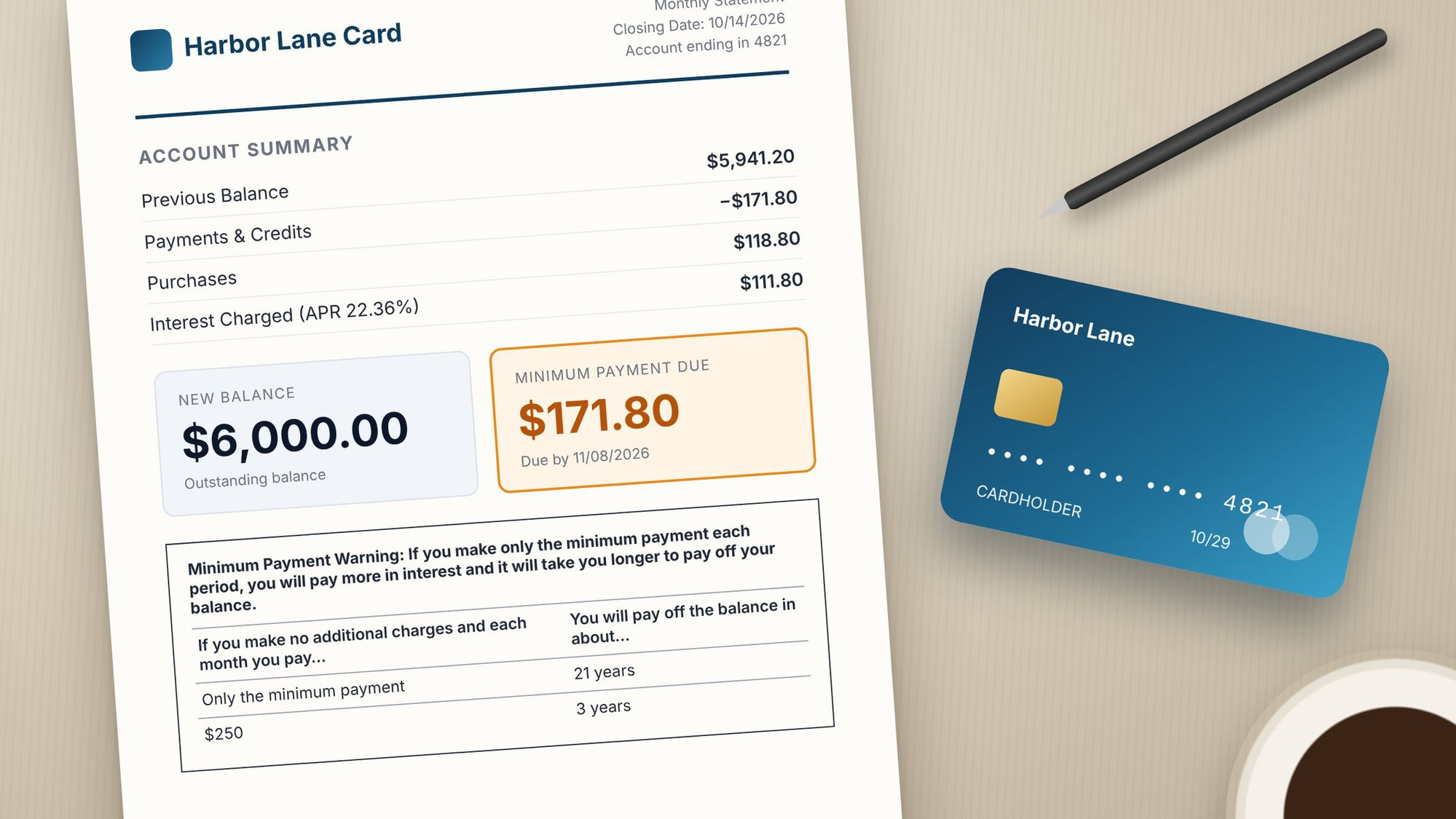
5. Avoid relying on credit cards to manage inflation
This is one of the most crucial cautions to keep in mind.
When prices increase but your income stays the same, it can be tempting to cover the difference with a credit card.
This can turn a short-term inflation challenge into a persistent debt issue.
Instead, update your budget promptly before the shortfall leads to debt.
Focus on covering essential costs first and cut back on non-essential spending when needed.
How to build a budget that withstands inflation
An inflation-resistant budget isn’t one that stays fixed forever; it’s one that you regularly update to keep pace with price changes.
Perform a monthly budget review
Each month, check your current spending against what you spent the month before.
Pay special attention to:
- Housing;
- Food;
- Gas;
- Utilities;
- Insurance;
- Healthcare;
- Debt payments.
Next, pinpoint which costs have shifted.
Spending just five minutes reviewing can catch issues before they become ongoing financial strains.
Monitor your individual inflation rate
You can figure out your personal inflation rate by tracking your own expenses:
Personal inflation rate = (current essential expenses − previous essential expenses) ÷ previous essential expenses × 100
Here’s an example:
- Last year: $3,500
- This year: $3,640
- Increase: $140
Calculating your personal inflation rate: $140 ÷ $3,500 × 100 = 4%. This means your essential spending grew by 4%, even if the overall inflation rate was just 3%.
This approach is far more practical for managing your household budget.
Why September is an ideal month to revisit your budget
For many households in the U.S., September marks a key financial milestone.
As summer expenses wind down, school costs may start piling up, and the year’s final months draw near.
In 2026, the Bureau of Labor Statistics plans to release the August CPI data on September 11, while the Federal Reserve’s September meeting is set for September 15–16.
This timing makes September an ideal month to assess:
- Back-to-school expenses
- Fall utility costs
- Transportation
- Insurance
- Emergency savings
- Holiday spending
- Credit card balances
Rather than waiting until December to find your budget has fallen short, make September your financial checkpoint.
How does the Federal Reserve influence inflation?
The Federal Reserve aims to maintain inflation at roughly 2% in the long term.
This means that a 3% inflation rate is still above the Federal Reserve’s target.
In a speech on September 3, 2026, Federal Reserve Governor Christopher Waller remarked that inflation remains well above the 2% target, though recent data also shows some easing in price increases.
He mentioned that the August data arriving could provide guidance for the September policy decision.
For families, the key takeaway isn’t trying to guess the Fed’s next action.
Instead, it’s important to understand that inflation and interest rates can impact your finances at the same time.
Rising prices can lead to higher monthly spending.
Increased borrowing rates can make credit card debt, car loans, and other types of debt costlier.
This makes managing your cash flow more critical than ever.
What steps should you take if your paycheck isn’t keeping pace?
When your income grows slower than your necessary expenses, it creates a cash-flow gap.
You can tackle this problem in two main ways:
Cut costs and boost your income.
Regarding expenses:
- Negotiate your recurring bills
- Shop around for insurance quotes
- Cut back on unused subscriptions
- Be strategic when grocery shopping
- Limit costly convenience purchases
- Pay off high-interest debts
Regarding income:
- Request a raise
- Explore better-paying jobs
- Take on extra work
- Check your employer’s benefits
- Develop skills to boost earnings
A major overhaul isn’t always necessary.
Boosting your cash flow by $100 each month adds up to $1,200 over a full year.
Author’s opinion
Experiencing 3% inflation isn’t a cause for alarm, but it does call for careful attention.
The common error is focusing solely on the national inflation figure and assuming it reflects your personal financial situation precisely.
That number doesn’t capture your reality. What truly matters is what you pay for essentials like housing, food, fuel, healthcare, insurance, and other regular costs.
When your expenses climb faster than your earnings, your budget will start to feel the strain.
You might not have control over gas, rent, or grocery prices, but you do control how quickly you adjust when those costs rise.
Ultimately, this is the most effective way to shield your budget from the impact of rising expenses.

Recommended Content
Credit card marke
Learn how the credit card market is splitting by credit quality and what APRs and credit scores and debt mean for U.S. consumers.
Continue reading * You will remain on the current site