
Reasons Behind the Recent Increase in Your Card’s Interest Rate
Wondering why your credit card interest rate increased? Discover the usual reasons behind the hike, important regulations to keep in mind, and practical tips to reduce the cost of carrying a balance.
What you should know about rising credit card interest rates
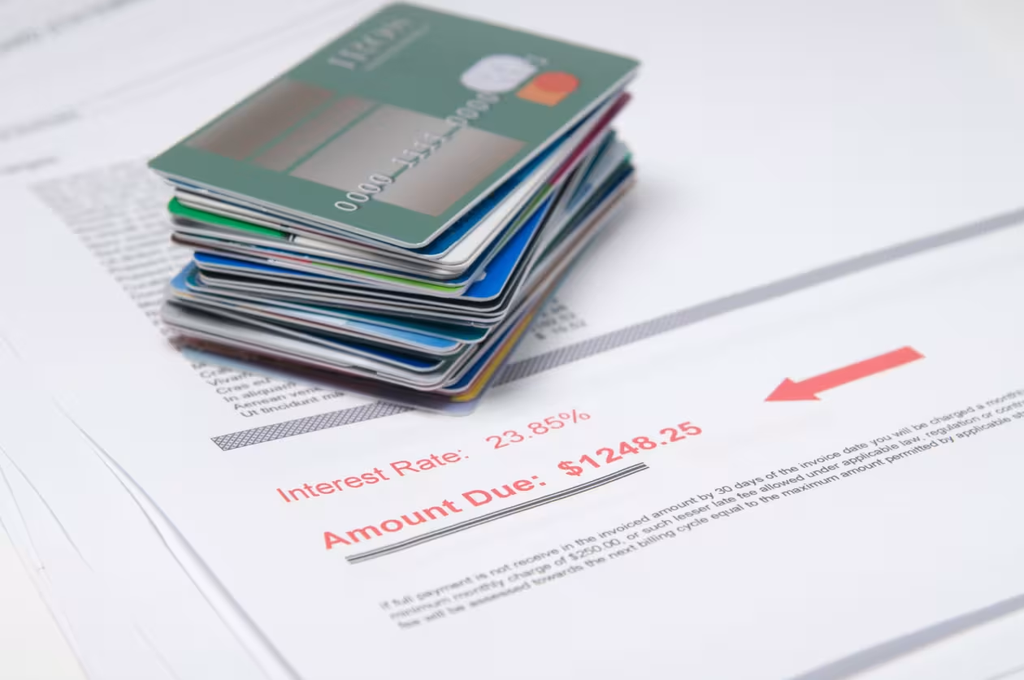
If your credit card’s interest rate suddenly appears higher, it’s not just your imagination—and it doesn’t always indicate a drop in your credit score.
There are multiple reasons why credit card APRs change. Your card might have a variable APR linked to an index, a promotional interest rate could have ended, or a missed payment might have caused your rate to rise under specific conditions.
When the interest rate on a revolving balance increases, even a small hike can significantly raise the cost of paying down your debt.
So if you glanced at your statement and wondered, “Why did my APR just increase?”, here’s what might be behind it—and what steps you can take next.
What Causes Your Credit Card Interest Rate to Rise?
There isn’t one single explanation for why every cardholder experiences a higher APR. The key is to identify what kind of rate applies to your card and what changes occurred on your account.
The most frequent reasons include:
- Your card has a variable APR and the related index has gone up;
- A promotional or introductory APR period expired;
- You missed a payment by more than 60 days;
- Your issuer raised the rate on new purchases after giving proper notice;
- A special rate tied to a payment plan changed or ended.
According to the CFPB, card issuers typically must give at least 45 days’ notice before raising the interest rate on new purchases after an account’s first year. However, exceptions exist and different rules may apply depending on the circumstances of the rate change.
Your Credit Card Interest Rate Might Be Variable
A key reason your card’s APR can change is if it’s variable instead of fixed.
Typically, a variable APR combines a base index with a margin set by your card issuer. When that index rises, your APR may go up based on the card’s terms.
The CFPB points out that when the index linked to a variable rate, like the U.S. Prime Rate, increases, it’s one valid reason for issuers to raise rates on current balances.
How the Federal Reserve Influences Your Credit Card APR
Your credit card’s APR shown on your statement is not directly set by the Federal Reserve.
Still, the Federal Reserve’s monetary policy can affect overall market interest rates and the benchmark rates that lenders use.
In September 2026, the Federal Open Market Committee increased the federal funds target range by 0.25 percentage points to 3.75%–4.00%, noting that inflation remained above its 2% target.
This means cardholders with variable APRs should watch Fed rate moves closely, but a Fed hike doesn’t guarantee every credit card APR will rise by the same margin.
How quickly and by how much your card’s rate changes depends on the terms of your card agreement and the benchmark index it follows.
Your Credit Card Interest Rate May Increase Following a Missed Payment
Missing a payment doesn’t always trigger an immediate rise in your APR.
That said, the CFPB states that a card issuer may raise the interest rate on your current balance if a minimum payment hasn’t been made within 60 days past the due date, according to the rules that apply.
This is why it’s crucial to review your payment record before assuming the rate hike is due to Federal Reserve actions.
What Happens When You’re 60 Days Past Due?
If your interest rate rose because your payment was over 60 days late, you might still be able to return to your prior rate.
The CFPB explains that an increase triggered by a payment more than 60 days past due may be reversible.
Because of this, it’s worthwhile to review your account’s payment history before assuming the higher APR is permanent.
Your Promotional APR Might Have Ended
Another frequent reason is far less concerning: the promotional rate period has simply concluded.
For instance, a credit card may promote a low or zero percent introductory APR for a limited time. After that period ends, the regular APR stated in the card’s terms usually takes effect.
The CFPB points out that when a temporary rate—like a promotional balance-transfer APR—expires, it can cause the interest rate on an existing balance to change.
Can Credit Card Issuers Raise Your Interest Rate Without Advance Notice?
In most cases, issuers are required to give prior notice for major changes, bbut the specifics vary depending on the kind of rate increase involved.
The CFPB states that credit card issuers generally must provide at least 45 days’ notice before raising the interest rate on new purchases once the account has been open for a year.
There are key exceptions, such as adjustments tied to variable rates and some other specific situations.
The rules are tighter for current balances. Typically, issuers cannot raise the interest rate on an existing balance except under certain conditions.
How to Spot Key Details in Your Card Statement
If your APR has shifted, look through your statement or communications from your issuer for wording like:
- Annual Percentage Rate (APR);
- Variable APR;
- Prime Rate;
- Effective date;
- Promotional rate expiration;
- Rate change notice.
The effective date is important because the new interest rate might not apply uniformly to all existing balances on your account.
How Much Could a Higher Credit Card APR Increase Your Costs?
The cost impact varies based on your outstanding balance and the speed at which you pay it off.
According to the Federal Reserve’s July 2026 report, credit card accounts charged interest averaged an APR of 22.15%.
To illustrate, here’s the interest charged on a $5,000 balance at various APRs:
This is a simple example based on the balance staying the same. Actual credit-card interest varies depending on how the issuer calculates daily balances and applies payments.
The takeaway is clear: the higher the APR and the longer you carry a balance, the more costly the debt becomes.
Looking at the bigger picture highlights why this is important. The New York Fed reported that U.S. credit-card debt hit $1.263 trillion in Q2 2026, an increase of $21 billion from the prior quarter.
Steps to Take If Your Credit Card Interest Rate Has Gone Up
Before you close your card or move the balance, make sure to review all the relevant information carefully.
Instead, follow these steps.
1. Discover Why Your APR Increased
Contact the phone number on your card or check the notice about the rate change.
Ask these questions:
If the representative mentions the increase is linked to the Prime Rate, be sure to request the current margin and index that determine your APR.
2. Verify If Your Interest Rate Is Variable
Review your cardholder agreement.
If your APR is variable, the increase may result from an adjustment tied to an index. The CFPB specifically points out that rises in an underlying index can affect balances already owed.
3. Request a Lower APR from Your Card Issuer
There’s no harm in asking.
Try saying this:
The CFPB points out that consumers might successfully negotiate a lower rate by reaching out to their issuer, who is also required to review some rate hikes after notifying customers.
4. Stop Adding New Debt If Your Balance Is Increasing
Carrying a balance month after month can get worse if you keep adding new purchases to the card.
This is especially true now, with consumer revolving credit still high. According to the Federal Reserve, outstanding revolving credit hit $1.357 trillion in July 2026.
Whenever possible, try to use your card only for purchases you can pay off promptly instead of letting a high-interest balance accumulate.
5. Weigh Your Balance Transfer Options Carefully
Balance transfer deals might lower your interest costs, but don’t focus only on the introductory APR when comparing offers.
Consider these factors:
- Fee for balance transfers.
- Duration of the promo period.
- APR once the promotion ends.
- If new purchases qualify for the promo rate.
- Realistic ability to pay off balance before promo expires.
A lower interest rate only matters if all terms truly lower your overall borrowing expenses.
Why This Is Especially Important in October 2026
October often brings higher expenses for many households across the U.S.
Spending on Halloween, autumn trips, home essentials, and early holiday shopping can all add extra charges to your credit card.
If you carry those expenses into future billing cycles, the APR becomes much more significant.
October also brings several key economic reports worth noting.
The Bureau of Labor Statistics will release September’s CPI data on October 14, and the Federal Reserve’s next FOMC meeting is set for October 27–28.
Because of this, October is an ideal time to review your card’s terms before holiday expenses pick up.
It’s important to also consider the wider consumer landscape.
The Conference Board noted that U.S. consumer confidence dropped to 81.9 in September 2026, marking its third straight monthly fall amid worries over financial health, inflation, and the job market.
Put simply, if your budget is already stretched, carrying a balance with a high APR can make an already tough month even more costly.
How Your Credit Card Interest Rate Relates to Your Credit Score
Having a higher APR doesn’t always mean your credit score suddenly dropped.
Several factors can influence how credit-card rates are set, such as:
- The card’s benchmark or index.
- The card’s fixed margin.
- Promotional-rate expiration.
- Payment history.
- The terms of your particular account.
Your credit score still plays a role when you apply for new credit, as lenders often consider this information to decide whether to approve your application and what conditions to offer.
However, if your current card’s APR has changed, don’t immediately blame your credit score—first review the notice and your card agreement.
When Is It Time to Reach Out to Your Credit Card Issuer?
It’s a good idea to reach out to your card issuer if:
- Your APR rose and you’re unsure why.
- You never got the required notice.
- The rate seems to conflict with your card terms.
- Your promotional APR ended sooner than expected.
- You think a payment was wrongly marked late.
- You want to ask for a lower APR.
- You’re having trouble making the minimum payment.
If you suspect the rate hike was a mistake, the CFPB recommends contacting your card issuer promptly.
If you can’t resolve the issue with the issuer, you have the option to file a complaint with the Consumer Financial Protection Bureau.
Opinião do autor
It’s easy to overlook a higher APR when you’re mainly focused on the total shown on your monthly statement.
Yet, the interest rate often reveals the true cost of carrying a balance on your credit card.
Here’s my take: if your credit card’s interest rate has risen, don’t jump to blame yourself or accept the change without digging deeper.
Begin by reviewing your statement carefully. Note the effective date, see if the APR is variable, and check for expired promotions or late payment penalties.
Given today’s conditions, taking these extra steps is worth it. Credit card debt stays above $1.2 trillion, the Federal Reserve reports average interest rates over 22% on charged accounts, and many Americans continue to face high inflation and economic uncertainty.
Recommended Content
Is credit card debt weighing you down?
Discover how personal loans can lower your costs, what happens to rates after the Fed’s hike, and when it’s smart to switch cards.
Continue reading * You will remain on the current site